
Stop admiring the problem
Stop admiring the problem
What we heard from presidents, prime ministers and frontline leaders at the Reykjavík Global Forum
Hildur Björnsdóttir, a mother of four, became mayor of Reykjavík in June. In her first week on the job, she went to the school play, took her kids to the dentist and drove her three-year-old to childcare, and she made sure nobody noticed.
Then her political adviser told her to stop. The city had elected a mother of four, the adviser said, and that should be celebrated. Hildur told the story from the main stage at the Reykjavík Global Forum and ended it with a promise: “I’m going to make it visible.” She’s using the seat, too. Her top priority is closing the gap of up to a year between when parental leave ends and when a childcare spot opens, a gap she said women carry most of.
Iceland isn’t a place where you’d expect a woman in power to feel she has to hide anything. In 1975, about 90 percent of Iceland’s women took the day off from their jobs and their housework, and five years later the country elected Vigdís Finnbogadóttir, the first woman in the world democratically elected president. This September, Iceland topped the World Economic Forum‘s gender gap rankings for the 17th year in a row.
And still, the mayor of its capital felt she had to keep part of who she is out of sight. That stayed with me for the rest of the forum, where hundreds of us from many countries spent three days talking about power.
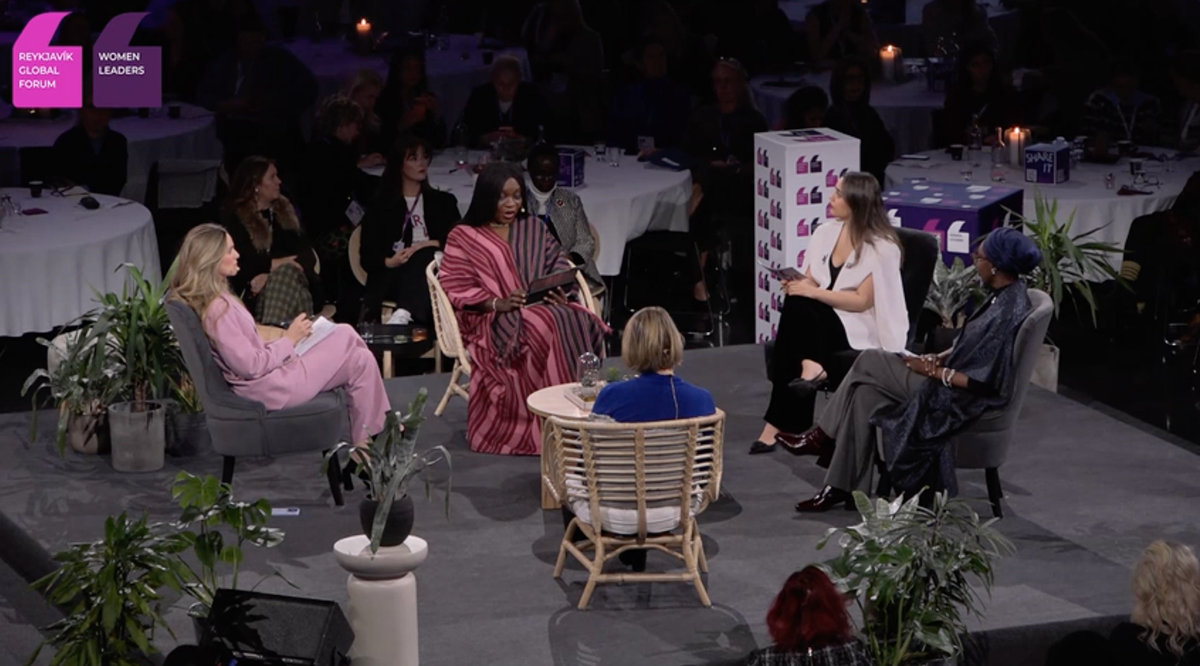
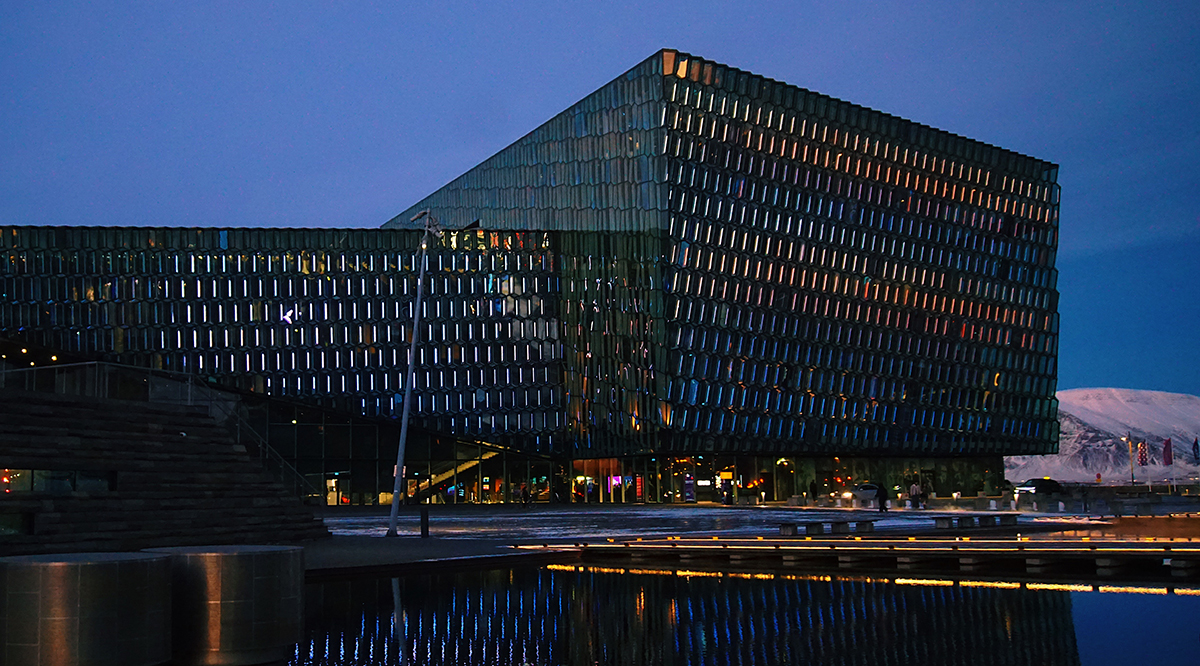
In our time there, we heard from Iceland’s president, Halla Tómasdóttir; two former prime ministers, Julia Gillard of Australia and Katrín Jakobsdóttir of Iceland; Nobel Peace laureate Jody Williams; government ministers from Estonia, Armenia and Bosnia; and the heads of Gavi, the Malala Fund and the Inter-Parliamentary Union.
Getting a seat isn’t the same as having power. Mayada Adil, a doctor from Sudan, said, “I had a seat at the table, but I was on the menu.” İlayda Eskitaşçıoğlu, a human rights lawyer, wants the world to “stop handing young women the microphone and start handing them the pen.” And Abosede George-Ogan of WILAN Global pointed out that no one is de-risking women as political candidates. Representation alone isn’t enough. Women have to be able to fully access their power.
Democracy and women’s full participation rise and fall together. This year’s Reykjavík Index found that how a country sees women as leaders tracks its democratic health, and may even foreshadow it. One main-stage session was titled “The Anti-Rights Era and the Cost to Women’s Leadership,” and Varina Winder of Arch Collaborative reminded us that this organized pushback “starts at the sub-national level.” That’s state legislatures, city councils and school boards. Nejla Liias of Kinaura Partners, who chaired that session, closed it with a line she’d brought from the Women Moving Millions Democracy Forum, which I’d attended as well: “There is no democracy without gender equality, and there is no gender equality without democracy.”
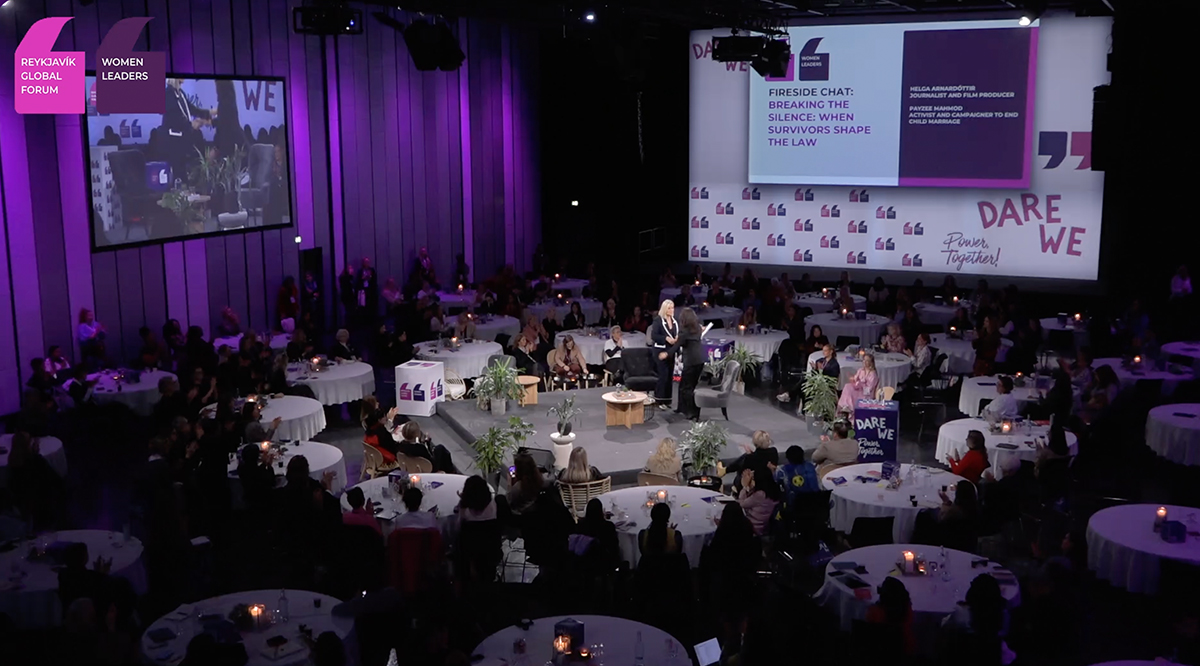
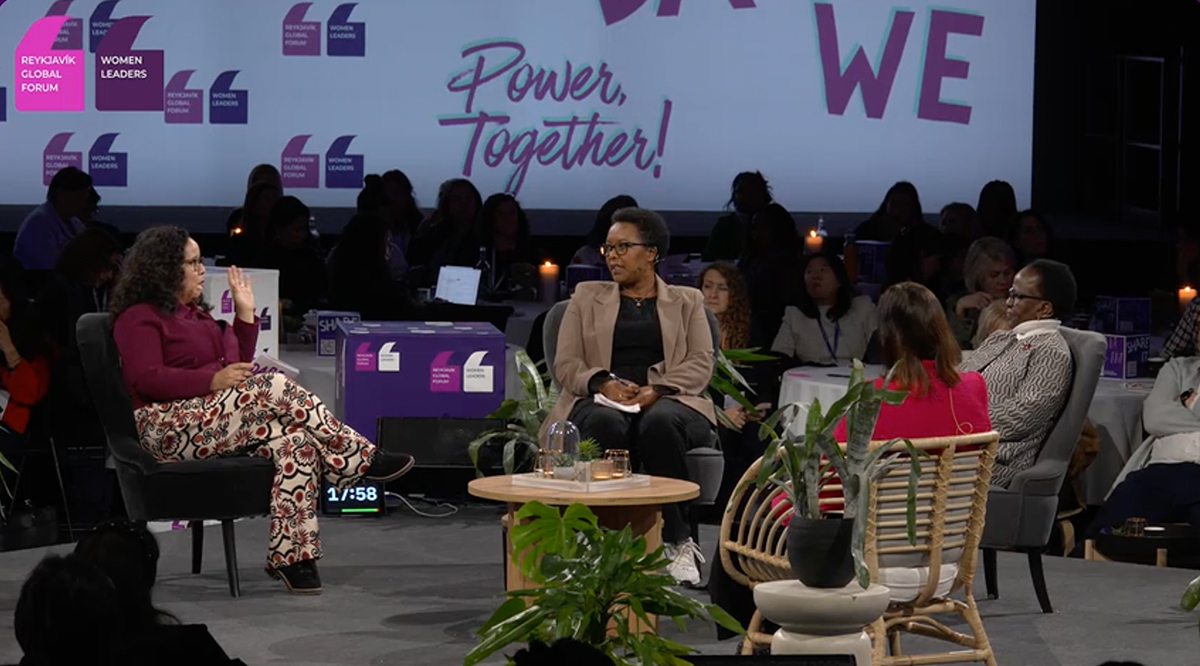
What surprised me most was how often leaders from other countries looked to the United States. They put our recent elections alongside Serbia and Brazil as proof that people can push back when democracy is under strain. Elizabeth Kennedy Trudeau of the George W. Bush Institute gave the credit to people on the ground.
Power is moving, and women need to be where it’s going. Gabriela Morawska-Stanecka of the Inter-Parliamentary Union said the questions to ask are “where power is moving, who controls it and who benefits from it.” A lot of it is moving into AI, platforms and capital. LinkedIn research that Sarah Steinberg shared found that across 27 countries, women hold just 13% of C-suite AI leadership roles at AI companies. The rules for AI are being written now, some of them in public rooms like legislatures and councils, and women need seats there.
This takes every generation at once. Nobody asked anyone to step aside. Hajer Sharief, who founded Together We Build It at 19, called for generations to lead together. Nadia Razali, who chaired the Generation to Generation session, gave us the image for it: not just passing the torch, but using “our torches to light other people’s torches.” I remember Gloria Steinem saying something similar. She wasn’t passing her torch, because the idea of only one torch was the problem. Gloria died in September, and her memorial in New York came the day after the forum closed.
Close to home is where trust still lives. Michelle Harrison of Verian, who presented the Index, shared research showing people trust what’s near them, which makes local leadership a real answer to problems that feel too big to touch. The women with the most at stake are already leading that way. Mayada told us women in Sudan are leading local community emergency rooms. Zahra Joya of Rukhshana Media described Afghan women running small businesses and reporting in secret. “They have agency,” she said. Hearing from women on those front lines felt like a call on its own to keep going.
In our own session, She Should Run co-hosted with RepresentWomen, Republican Women for Progress, Running Start, Tilting Futures and Vote Mama. Each organization brought one solution to the table, and the room worked to add new angles to it. Ours was this: the muscle women build getting things done in their communities is the point of a stronger society, and it’s also a path to public leadership. Too often we focus on tactics, on what a candidate says and does, and bury what the work actually looks like. So I asked the people at my table what that work looks like in their countries and communities, and where the openings are to lift it up.
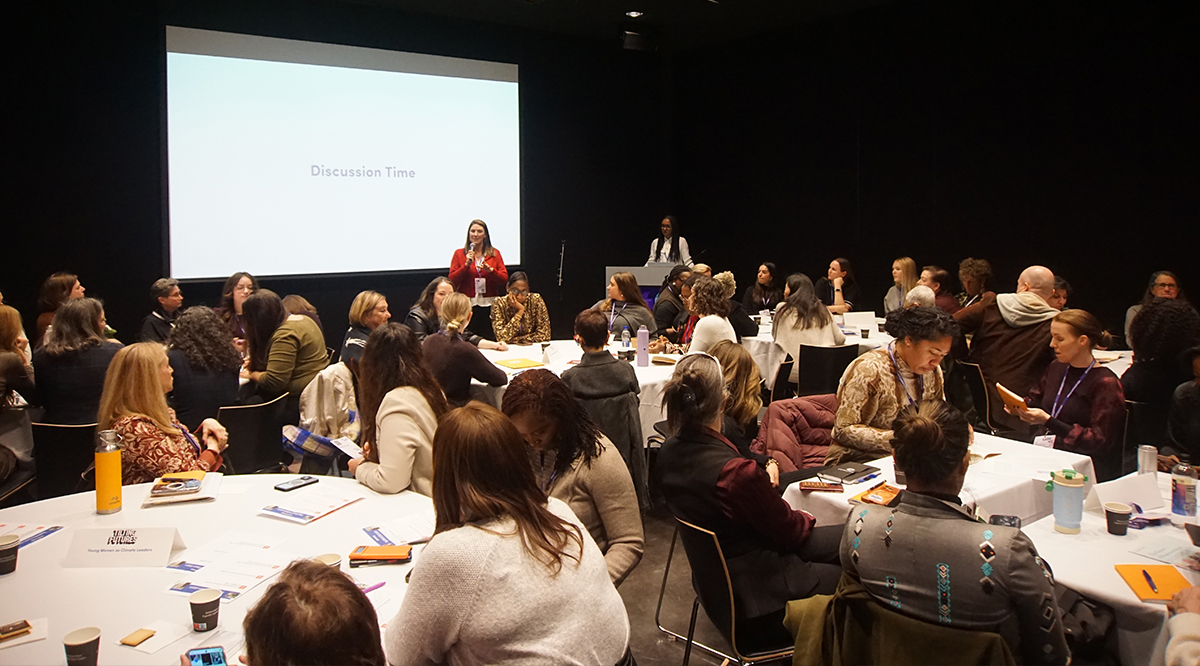
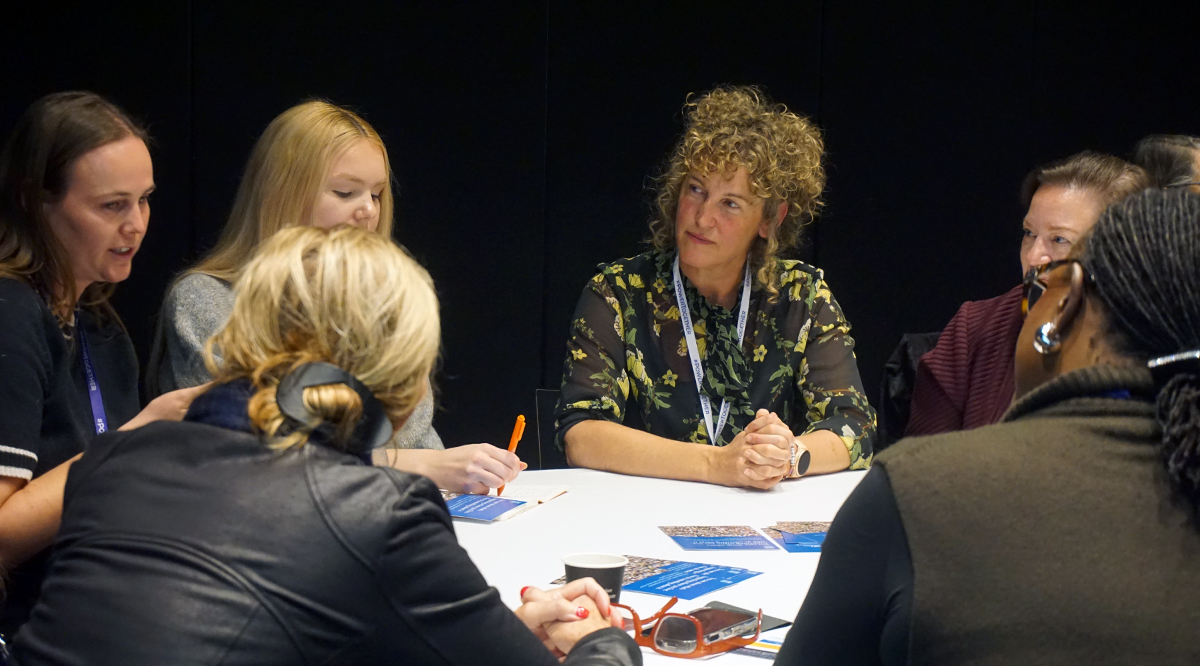
What women are doing in Sudan, Afghanistan, and Iceland is tied to what women are doing in communities here at home. So are the risks. We heard a lot about the harassment and threats that push women out of public life, and Armenia’s Minister of Internal Affairs, Arpine Sargsyan, named what’s at stake: “equality cannot exist where fear determines the choices women make.”
If I had to sum up the forum in a phrase, it’s one I heard again and again, and Sandra Pepera of ODI Global said it most plainly from the main stage: “let’s stop admiring the problem.” The data on how far we have to go was everywhere. What the room kept calling for was bold solutions, people ready to act on them and a continued push forward. In towns across this country, that means women taking the seat, whether it’s on a council, a board or a commission, and then using every bit of power that comes with it.
World Economic Forum: Global Gender Gap Report 2026 press release (Sept 16, 2026)
National Geographic: 50 years ago, the women of Iceland took a day off (Oct 24, 2025)
Forum program